Preparing Necessary Chemicals
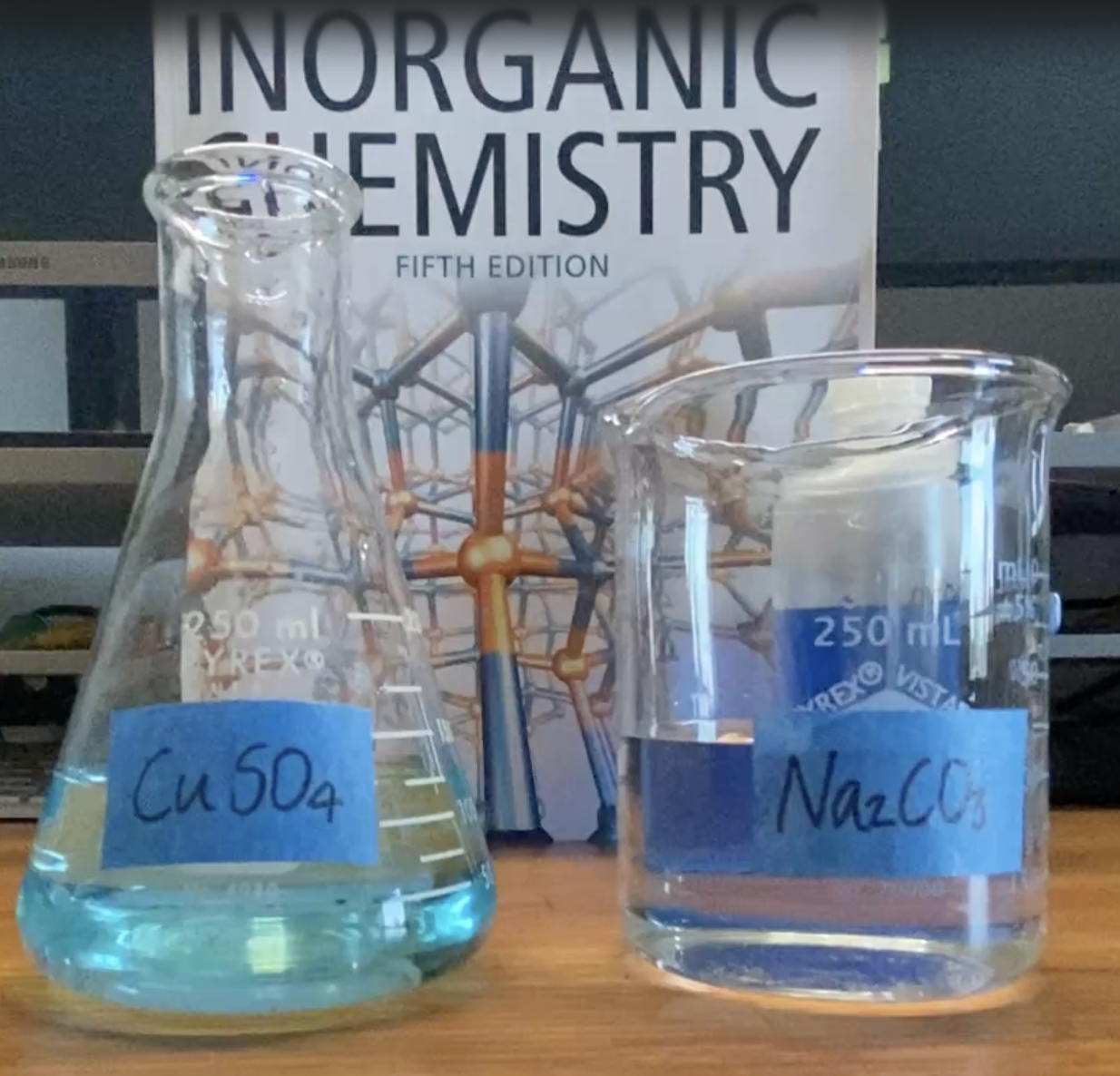
First, I obtained 0.1 M copper sulfate (CuSO4) from the chemical storage room. At the time, I was deeply interested in qualitative analysis, memorizing precipitation rules and developing intuition based on Hard–Soft Acid–Base (HSAB) theory. I also prepared sodium carbonate (Na2CO3) from washing soda powder in my kitchen. At first, here is the net-ionic equation for the reaction I thought would occur:
However, I did not take into account that CO32−(aq) is technically a weak base and therefore produces OH−. Therefore, the correct chemical equation is:
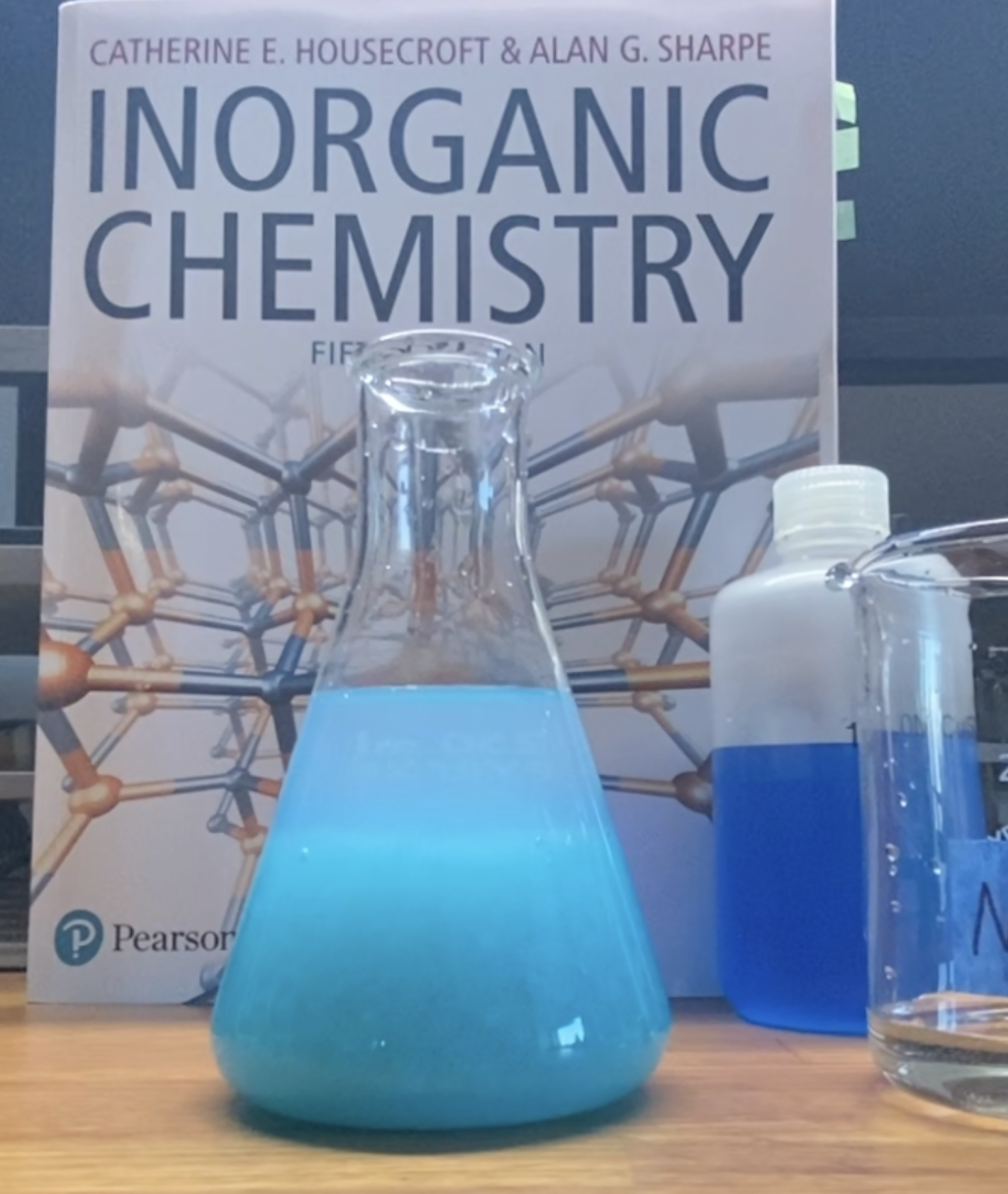
I mixed them as shown in Figure 2 and observed how the malachite precipitate gradually settled at the bottom. Using filter paper, I separated the precipitate from the solution. I continued adding Na2CO3(aq) to CuSO4(aq) until the solution turned approximately clear. The clear solution was then discarded into the waste basket.
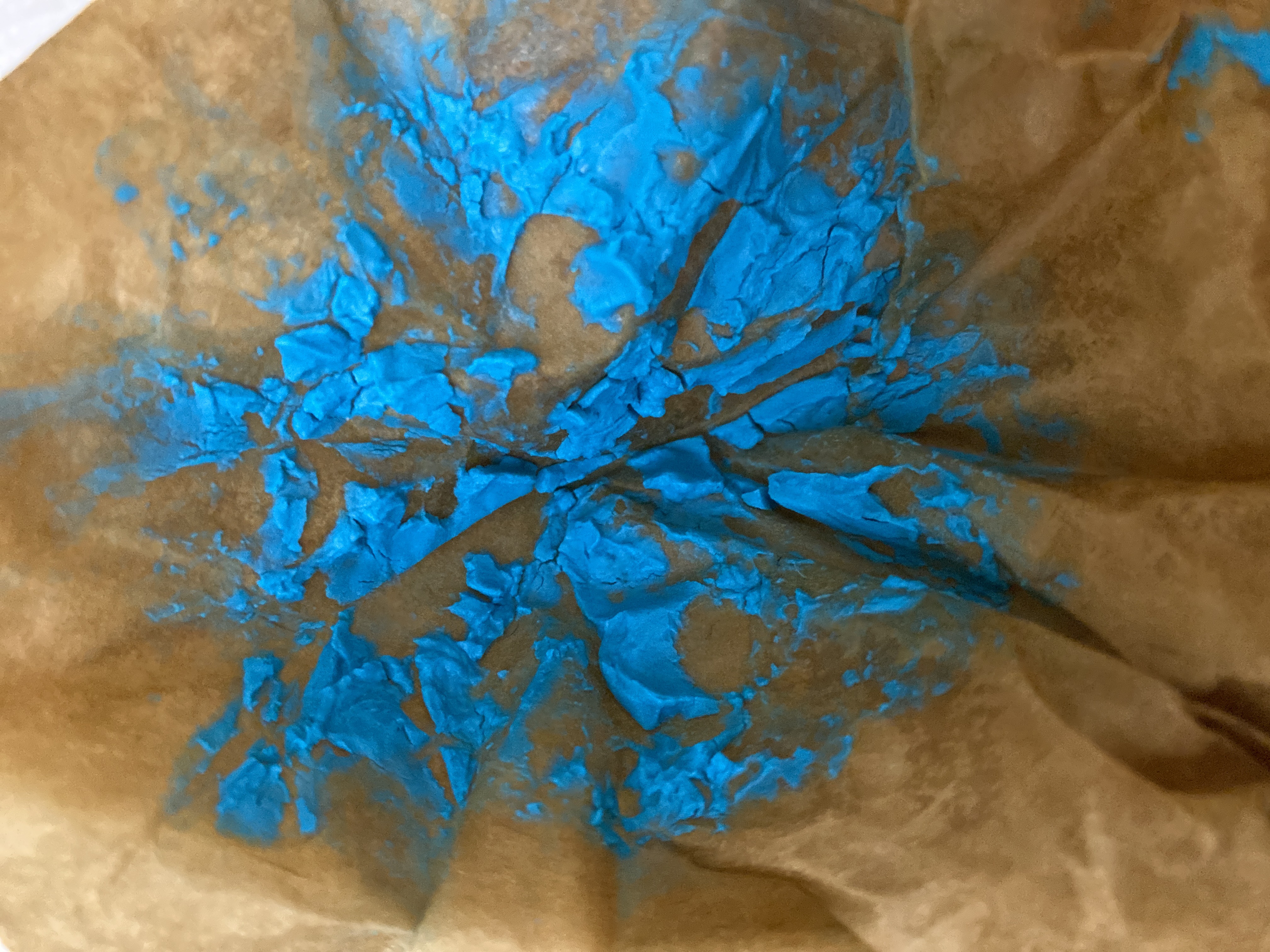
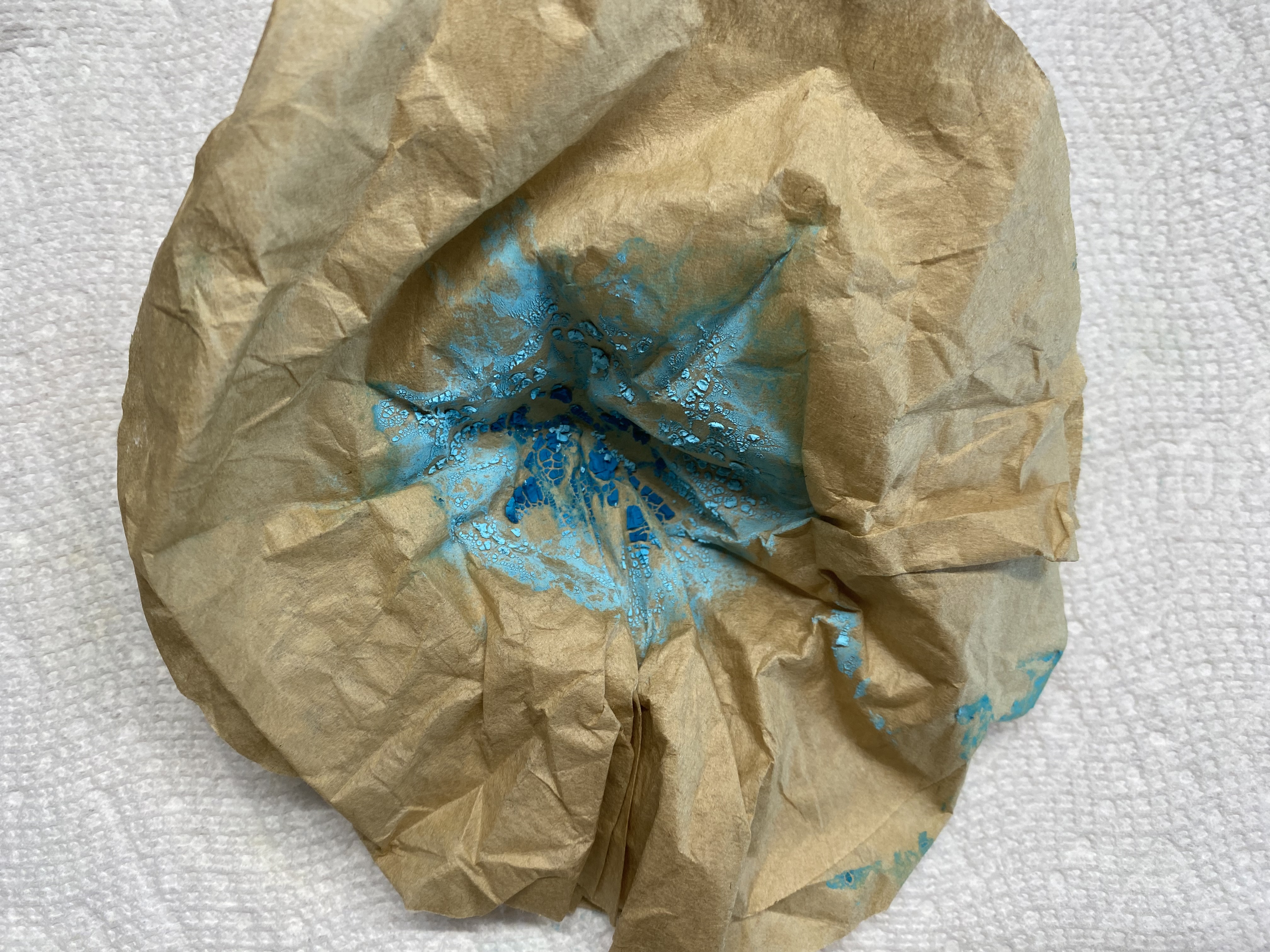
It was fun to see the vivid cyan malachite precipitates collecting on the filter paper! At the time, I was especially fascinated by how such a striking solid could emerge simply by mixing two solutions together. Please see Figure 3 and Figure 4 for images of the filtered precipitate.